The problem with print
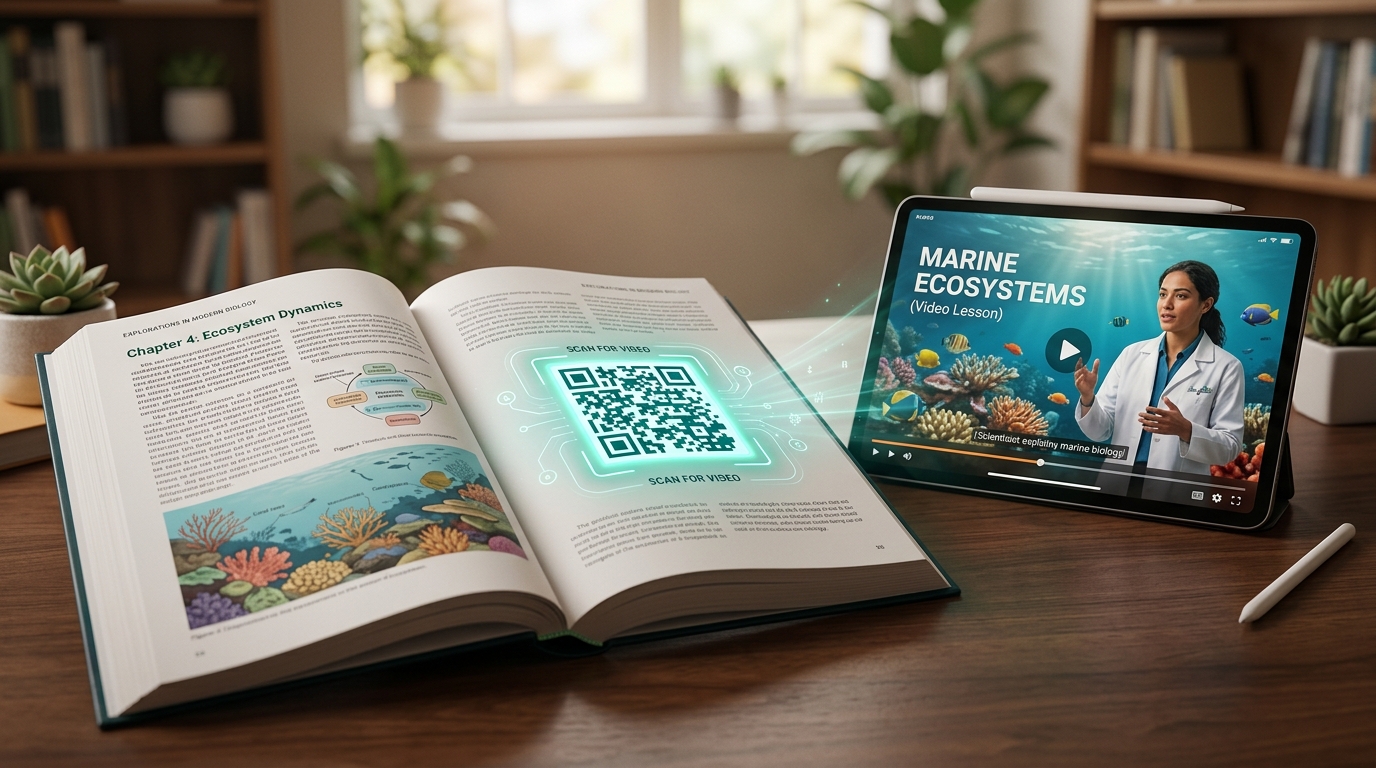
A textbook printed in January may go out of date by March — a changed curriculum link, a broken video URL, a corrected answer. Static QR codes baked into the book are useless the moment the destination moves. Dynamic codes fix this entirely.
Book hierarchy in QRoute
QRoute organises content as Book → Edition → Chapter/Section → QR code. This mirrors how publishers think. A chapter can have multiple QR codes — one for an explainer video, one for an interactive exercise, one for supplementary reading.
Multi-domain delivery
A publisher with multiple branded domains can route the same code differently per domain. scan.publisher.in can serve the Hindi audio track while qr.bookseries.com opens a language selector page — the same physical QR code printed once, serving different audiences intelligently.
Mid-semester updates without reprinting
When the curriculum changes, an editor logs into the QRoute dashboard, finds the chapter, and updates the destination URL. Within seconds, every student who scans that code gets the new resource. No recall, no stickers, no reprinting.
Analytics for educators
Publishers can see which chapters generate the most scans, at what times, and from which regions. Chapters with low scan rates might signal hard-to-find codes or unengaging content — actionable insight that's impossible to get from a static link.
Bulk import
Import hundreds of chapter destinations at once via CSV. Map each chapter's destination URL, smart-routing rules, and fallback URL in a spreadsheet, then upload. QRoute generates all the codes in one batch and exports a print-ready PDF.